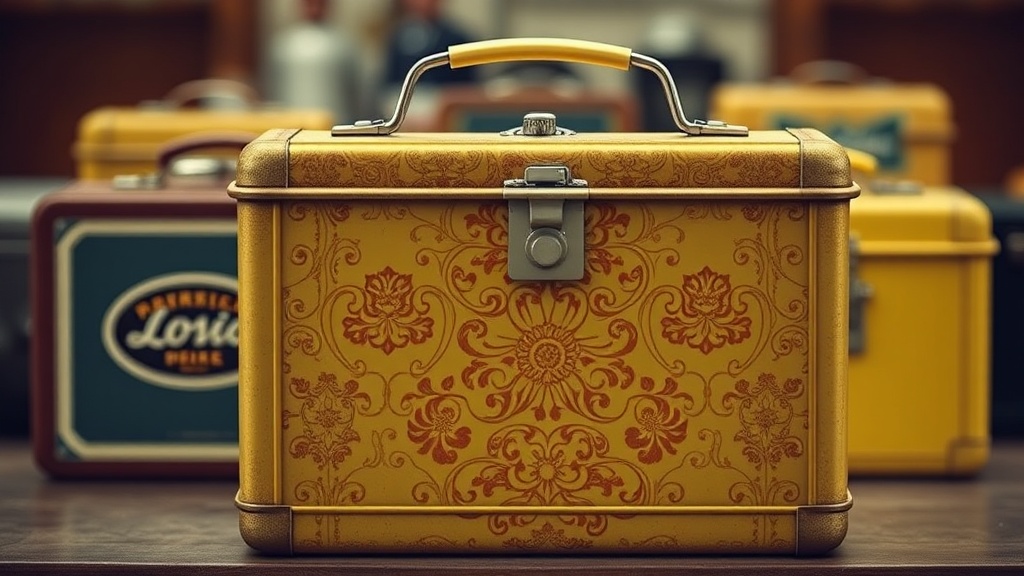
Sourcing High-Quality Vintage Metal Lunchboxes from Estate Sales

What to look for at estate sales and auctions
Finding a rare piece of history at an estate sale requires a sharp eye and a bit of patience. You aren't just looking for any old container; you're hunting for specific-era tin, high-quality lithography, and intact hardware. Most collectors make the mistake of rushing through a sale, grabbing the first thing that looks "old," but the real treasure lies in the details. You'll learn how to identify high-value vintage lunchboxes by inspecting the structural integrity, the vibrancy of the graphics, and the presence of original accessories like Thermos inserts.
When you're scanning a table of miscellaneous household goods, look for the weight. Genuine vintage tin and steel-bodied lunchboxes have a certain heft that modern plastic imitations lack. Look for the edges—are they sharp and clean, or are they bent and rusted? A box with a dented lid might still be a great piece, but a box with a crushed bottom is often a lost cause. If you see a metal box that looks heavily weathered, check the lithography. Sometimes, a bit of surface grime hides a stunning, bright color scheme that just needs a gentle touch to reveal its former glory.
Don't forget the accessories. A complete set—the box, the matching metal water bottle, and the internal Thermos—can significantly bump the value. If you find a box that's missing its Thermos, it's often cheaper to buy, but you'll have to hunt for that missing piece later to make it a complete set. I always check the interior lining as well. If the inside is coated in a thick layer of rust, the piece might be more of a shelf-piece than a functional collectible. However, if the rust is minimal, it's often a sign of a well-loved item that can be stabilized.
How can you identify a high-value vintage lunchbox?
Identification is a skill that develops over time. One of the first things you'll notice is that certain brands or characters command much higher prices than others. For example, mid-century space-age designs or specific licensed characters from the 1950s and 60s are often the most sought-after. You can use resources like the eBay Sold Listings to see what people are actually paying for specific models rather than just the asking prices you see on general marketplaces. This gives you a realistic view of the current market value.
Check the manufacturer's marks. Often, the bottom or the inside of the lid will have a small stamp or a printed name. Brands like Aladdin or various high-end metal manufacturers produced pieces that collectors prize highly. If you find a box with a very specific, high-detail graphic, it might be a limited run or a more expensive production model. Pay attention to the type of printing used; older lithography has a distinct look compared to modern-era reproductions. The colors in true vintage pieces often have a depth that's hard to replicate in modern digital printing.
Another way to gauge value is the condition of the metal. A "mint" condition box is the gold standard, but in the world of estate sales, you'll mostly find "good" or "fair" condition. A box with a small scratch is much more acceptable than one with a large puncture. If the metal is soft or brittle, avoid it. You want something that retains its structural shape. If the lid doesn't snap shut perfectly, the value drops. A loose-fitting lid can be a deal-breaker for serious collectors who want a pristine display piece.
Where are the best places to find vintage metal lunchboxes?
While estate sales are a primary hunting ground, they aren't your only option. Thrift stores, antique malls, and local garage sales are also fertile ground. The key is to go where the "unorganized"-ness is. Big-box antique stores often price things quite high because they've already done the work of identifying the item. In contrast, a local garage sale or a small-town estate sale might have a box sitting in a cardboard box labeled "kitchen stuff" that is actually a mid-century gem. This is where the real profit or the best finds happen.
Online marketplaces are also a tool, but you have to be careful. Many sellers list items with vague descriptions. If you see a listing that just says "Vintage Metal Box," it might be a sign that the seller doesn't know what they have. This can be an opportunity for you. However, you must be able to request more photos. If a seller won't provide a clear photo of the bottom or the inside, move on. You can also check specialized collector forums and groups to see what is currently trending in the community. Knowledge of the current market ensures you don't overpay for a common item.
If you're looking for more history on how these items were produced, the Smithsonian Institution archives often have wonderful documentation on industrial design and consumer goods from the 20th century. Understanding the era of production helps you realize if you're looking at a 1940s tin or a 1970s plastic-lined metal box. The distinction matters immensely for both history and value. Always keep a small notebook or a digital note on your phone to jot down what you see during your hunts—it helps you refine your eye for the next time.
- Always inspect the interior for heavy rust or debris.
- Check the hinge strength and the lid fit.
- Look for the original manufacturer's stamp.
- Verify if the accessories (Thermos, water bottle) are included.
- Compare your find with recent sold prices online.
The more you look, the more you'll recognize patterns. A seasoned collector doesn't just see a box; they see the era, the production method, and the potential for a complete set. Whether you're hunting for a single centerpiece or building a massive collection, the goal is to find pieces that tell a story. A well-preserved metal lunchbox is a small piece of a much larger cultural history, and finding one at a great price is one of the most rewarding parts of this hobby.