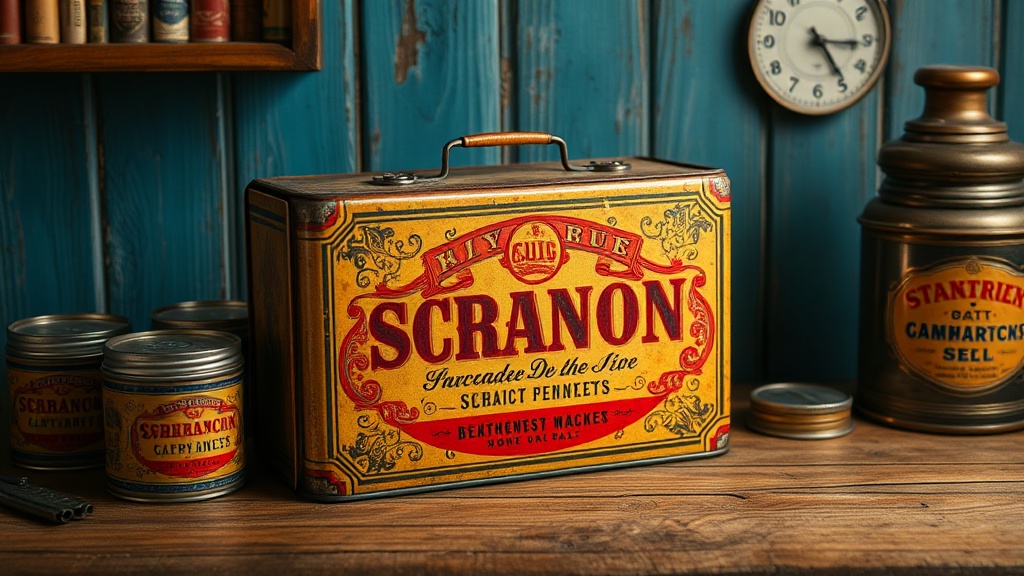
Spotting Real Vintage Tin and Identifying Reproductions

Have you ever held a shiny, colorful lunch box only to feel a sudden pang of doubt about whether it's a genuine relic from the 1950s or a modern reproduction? Distinguishing between an authentic vintage tin and a high-quality modern reprint is one of the hardest skills to master in the collecting world. This guide breaks down the physical markers, material science, and manufacturing tells that separate a true piece of history from a contemporary copy.
Collecting vintage metalware isn't just about the aesthetic; it's about the provenance. When you're hunting at estate sales or bidding on auction sites, you need more than just a "gut feeling." You need a checklist of physical attributes. If you're just starting out, the stakes can be high—both for your wallet and your collection's integrity.
How Can You Tell if a Tin Lunch Box is Real Vintage?
The most reliable way to identify a genuine vintage tin is to examine the physical weight, the seam construction, and the specific type of printing used during the era of production. Most mid-century metal lunch boxes were made using lithography on tin-plated steel, which creates a very specific look and feel compared to modern digital printing.
First, look at the metal itself. Real vintage pieces often show signs of "tin fatigue" or minor oxidation. This isn't the same as rust, which is a destructive process. Instead, look for a slight dulling of the sheen that comes from decades of age. A modern reproduction often looks "too perfect"—the colors are too bright, the surface is too smooth, and the shine is often unnaturally high-gloss.
Check the lid and the base. On true vintage pieces, the way the metal is crimped or folded is often slightly irregular. Modern machines are precise—too precise. If the edges of the lid are perfectly uniform and the lid fits with a vacuum-tight, machine-perfect seal, you might be looking at a reproduction. (I've seen many "reprints" that look great at a distance but reveal their true nature once you feel the lid's edge.)
Another big giveaway is the weight. Vintage tins often have a certain heft that feels substantial. While modern reproductions try to mimic this, they often use thinner, cheaper aluminum or lightweight steel to save on shipping costs. If the box feels suspiciously light or "flimsy" in your hands, proceed with caution.
The Lithography Test
In the mid-20th century, manufacturers used offset lithography to print designs directly onto the metal. This process results in a very integrated look where the ink is part of the metal surface. If you look closely at a vintage piece with a magnifying glass, you won't see a "dot pattern" like you see in modern digital inkjet printing. If you see tiny, distinct dots of color (CMYK patterns), it's almost certainly a modern reproduction.
You can research the history of metal printing through Wikipedia's entry on lithography to understand how these techniques evolved. Understanding the technical limitations of the past helps you spot the "perfections" of the present.
What Are the Signs of a Reproduction?
Reproductions often feature modern-style printing-induced textures and lack the subtle imperfections found in mid-century metalwork. If a piece looks like it was printed in a high-resolution office or a modern commercial shop, it's likely not the real deal.
Here is a quick comparison to help you spot the difference in the field:
| Feature | True Vintage (1940s-1960s) | Modern Reproduction |
|---|---|---|
| Printing Style | Lithographed (integrated ink) | Digital or UV Printed (visible dots) |
| Metal Texture | Slightly textured or aged patina | Perfectly smooth and glossy |
| Seams/Edges | Slightly irregular, hand-finished feel | Perfectly uniform, machine-cut |
| Weight | Substantial, heavy steel | Often lighter, thin aluminum or steel |
One thing to watch out for is the "patent" or "copyright" line. Many modern reproductions will include a tiny copyright date or a manufacturer's name that didn't exist in the 1950s. Sometimes, they leave it off entirely to avoid legal trouble, but often, the font used in that tiny text is a dead giveaway. Modern fonts are often too crisp and clean for the era.
The scent is another subtle clue. Old metal has a specific, slightly metallic or "old" smell. New reproductions often have a faint smell of fresh ink or industrial coatings. It's a small thing, but it's a detail that seasoned collectors notice.
How Much Does a Vintage Tin Lunch Box Cost?
The price of a vintage tin lunch box depends entirely on its rarity, its condition, and the popularity of the character or brand depicted. A common 1950s lunch box in "good" condition might only fetch a few dozen dollars, while a rare, high-demand piece can go for hundreds or even thousands.
Don't expect a flat rate. The market is wildly volatile. For example, a standard Disney or Looney Tunes tin might be common, but a rare Star Wars metal box from the late 70s is a different beast entirely. When you're looking at prices, always check the "sold" listings on auction sites rather than the "asking" prices. The asking price is just a dream; the sold price is the reality.
If you're looking to invest, keep these three factors in mind:
- Character Demand: Characters like Mickey Mouse or classic superheroes command much higher premiums.
- Condition: A box with even a small dent or a scratch in the lithography loses significant value.
- Completeness: For items that have detachable parts (like certain lunch sets), having all the pieces is vital for value.
If you are interested in the preservation of these items, you might want to look into The Library of Congress archives or similar historical databases to see how commercial products were documented in the past. This can give you a baseline for what "authentic" looks like for a specific era.
If you're already a collector and want to learn how to maintain your finds, check out my previous post on reviving and enjoying your retro lunchboxes. Keeping them clean and rust-free is the best way to ensure their value stays high.
It's easy to get caught up in the excitement of a find, but a little skepticism goes a long way. If a deal seems too good to be true, it probably is. A "brand new" 1950s lunch box at a bargain price is a red flag. Real history has a history. It has a story written in its scratches, its weight, and its slightly imperfect edges. Learn to look for those imperfections—they are the proof of authenticity.