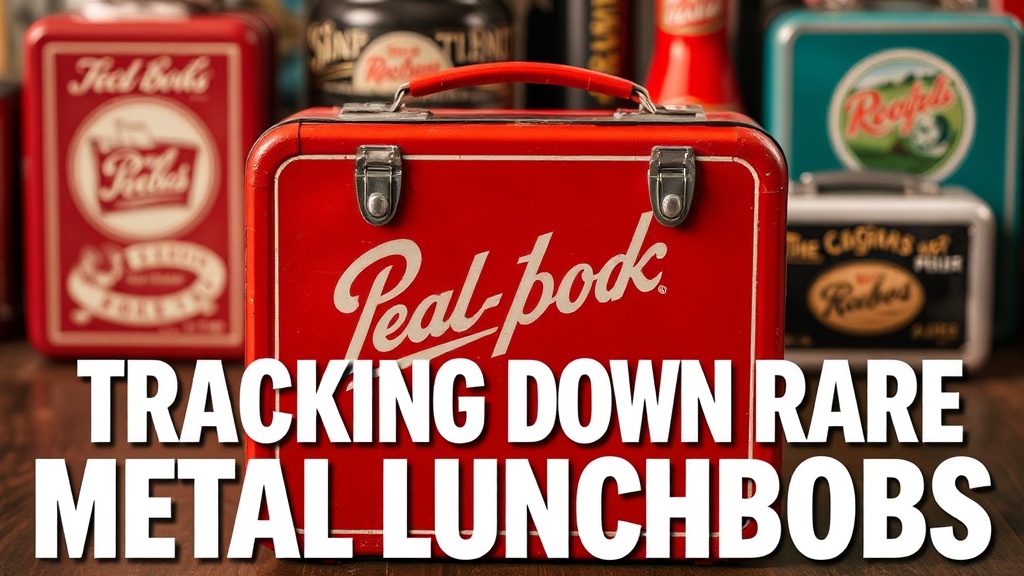
Tracking Down Rare Mid-Century Metal Lunchboxes

Why Certain Metal Lunchboxes Command Higher Prices
Did you know that a single 1950s metal lunchbox can sometimes fetch more than a modern high-end gaming console at auction? It isn't just nostalgia driving these prices; it is the sheer scarcity of well-preserved specimens. While plastic versions became the standard by the 1970s, the era of heavy-gauge tin and lithographed steel remains the gold standard for serious collectors. Finding these pieces requires more than just looking at a shelf; it requires understanding the specific production runs and the subtle nuances that separate a common find from a museum-quality treasure.
Collectors often overlook the importance of the lithography quality. In the mid-20th century, the way colors were layered on tin metal determined how well a box would hold up to the daily grind of a school cafeteria. A box with vibrant, un-faded colors is much harder to find than one with heavy scratches or sun-bleached graphics. This post explores the specific ways you can locate these rare pieces and what you should look for when you finally find them in the wild.
Where Do Collectors Find Rare Vintage Lunchboxes?
If you are only looking at local thrift stores, you might be missing the real action. Most serious collectors find their best deals through specialized channels. While the joy of a "garage sale find" is real, the high-end pieces usually circulate in specific environments.
- Specialized Estate Auctions: Estate sales are often where the most interesting collections surface. You aren't just looking for a box; you're looking for the whole collection that a collector might have kept in an attic for decades.
- Online Auction Aggregators: Sites like eBay are the obvious choice, but you have to be willing to set alerts for specific keywords. Searching for "vintage tin lunchbox" is a start, but searching for specific decades or character names—like "1950s Disney Tin"—is how you actually find the gems.
- Antique Malls and Regional Shows: There is a big difference between a flea market and an antique mall. Antique malls often have more curated-stock, meaning the items have been vetted by dealers who know their worth.
One tip for the savvy hunter: look for "unsearched" lots. Sometimes, a dealer might list a collection of "old metal boxes" without specifying the brand or year. This is where the real profit and the real thrill live. You might find a rare Smithsonian Institution-level piece hiding under a generic description.
What Makes a Lunchbox Truly Collectible?
Not every old lunchbox is a winner. To the untrained eye, a dented tin box might look like junk, but to a collector, that dent might be a deal-breaker or a minor detail depending on the brand. There are three main factors that dictate whether a piece is a common find or a rare prize.
- The Brand or Character: Licensed products from the 1950s and 60s—think early Disney, Hanna-Barbera, or iconic cartoon characters—hold much higher value than generic food-branded tins.
- The Material Condition: We talk about this often, but the state of the metal is everything. A box with heavy rust on the bottom or a broken handle is often relegated to "parts" status rather than a display piece.
- Completeness: If the original thermos or the matching plastic interior tray is still present, the value jumps significantly. A box without its original contents is often seen as an "incomplete set."
| Feature | Common Tier | High-End Tier |
|---|---|---|
| Material | Standard Tin | Heavy-Gauge Lithographed Steel |
| Graphics | Faded/Scratched | Vibrant/Crisp Colors |
| Accessories | Missing Thermos | Complete with Thermos/Tray |
It is worth noting that the era of the "Tin Era" (roughly 1940-1960) is where the most significant value lies. Once plastic took over, the collectible market shifted toward much lower-value items. If you find a piece from this window, pay close attention to the edges and the hinges. A broken hinge can drastically reduce the value, even if the graphics are perfect.
How to Verify the Authenticity of a Vintage Find
Because vintage items are so popular, the market is flooded with "repro" or reproduction pieces. These are modern-made items designed to look old. While they are fine for decoration, they won't hold their value in a collection. To avoid being fooled, you need to look at the physical properties of the object.
First, check the weight. Authentic mid-century metal lunchboxes have a certain heft to them. Modern reproductions often feel lighter or use thinner, more flimsy metal. Second, look at the lithography. Real vintage tin often has a very slight texture to the print, and the colors might have a specific depth that modern digital printing can't quite replicate. If the graphics look-too-perfect or "too digital," be suspicious.
Always research the specific manufacturer. A reputable source for historical context is the Library of Congress, where you can often find patent records or historical advertisements that can confirm if a specific design existed during a certain era. If a box claims to be from 1955 but uses a font or a graphic style that wasn't popularized until the 1970s, you've found a reproduction. This kind of scrutiny is what separates a hobbyist from a true collector.
The search for these items is rarely a sprint; it is a marathon. You might spend months looking at nothing but junk before you stumble upon that one perfect, unblemed piece of history. Keep your eyes sharp and your knowledge of the era's production methods up to date. The more you know about the history of the manufacturing process, the less likely you are to spend money on a modern imitation.