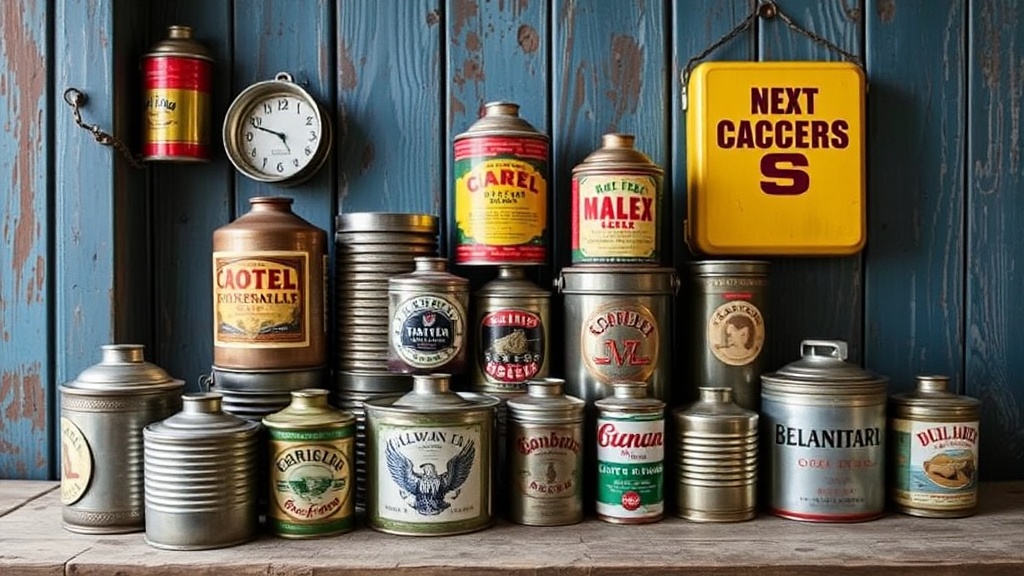
Why Your Vintage Tin Collection Needs Proper Ventilation

The Hidden Danger of the Airtight Display Case
Picture this: you've just spent months hunting down a pristine 1950s character lunchbox. You find it in a shop in Richmond, the lithography looks fresh, and the metal is remarkably bright. You bring it home, place it behind a thick sheet of glass in a display case, and seal it away to keep the dust off. A few months later, you notice a faint, brownish discoloration creeping around the seams or a slight swelling in the metal. You haven't even touched it, yet the object is degrading. This is the reality of micro-environments. While we want to protect our collections from the outside world, we often accidentally create a trap that accelerates the very decay we're trying to prevent.
Maintaining a vintage collection requires more than just a clean shelf. It requires an understanding of how air, moisture, and temperature interact with old materials. When you seal a metal lunchbox inside a non-breathable case, you aren't just keeping dust out; you're trapping whatever humidity was present during the packing process. This stagnant air becomes a breeding ground for oxidation. If you aren't careful, your prize possession becomes a victim of its own protection.
How much humidity is too much for metal lunchboxes?
For collectors of tin and steel, the answer is quite low. Ideally, you want to keep the relative humidity (RH) between 35% and 45%. If the humidity climbs above 50%, you're entering the danger zone where moisture begins to react with the metal surfaces. This is particularly true for vintage lunchboxes that might have internal coatings or remnants of organic matter (like old food residue or paper liners) that hold onto moisture.
If you've ever noticed a "musty" smell coming from a display, that's a red flag. It means air isn't moving, and moisture is sitting on the surface. To keep an eye on this, you might look at resources like the Library of Congress preservation guidelines, which discuss how environmental factors affect physical objects. Even though they focus on a broader range of materials, the principles of moisture and air circulation remain the same for any delicate item.
Common Signs of Moisture Damage
Detecting damage early can save a piece from becoming unsalvageable. Keep an eye out for these specific indicators:
- Oxidation Spots: Small, circular brown or orange patches that look like they are emerging from under the paint.
- Lifting Lithography: When the paper or printed layer begins to bubble or peel away from the metal.
- The "Metallic" Scent: An increase in the smell of iron or rust often precedes visible damage.
- Fogging: A thin film of condensation on the inside of a display case, usually visible in the morning or after a temperature shift.
Can a display case actually cause rust?
The short answer is yes, if it isn't designed for airflow. A truly airtight case is often the enemy of a collector. If you place a lunchbox in a sealed acrylic box, any moisture trapped inside stays there. This is especially dangerous if the lunchbox has any internal corrosion already present. The metal expands and contracts with temperature changes, and in a sealed environment, these changes can lead to micro-cracks in the protective lacquer or paint.
Instead of a sealed box, consider using a display with small ventilation gaps or a case that allows for a controlled atmosphere. Many professional collectors use silica gel packets (desiccants) inside their display areas to manage moisture levels. However, you must remember to replace or reactivate these regularly. A spent desiccant does nothing but take up space. For more advanced discussions on how to handle metal degradation, the Getty Conservation Institute offers incredible insights into the science of material aging.
Another tip is to avoid placing your collection near heat sources. Radiators, sunny windowsills, or even electronics can raise the temperature of your display case. Heat drives moisture out of the air, but as the temperature drops later in the evening, that moisture condenses. This constant cycle of heating and cooling is a nightmare for vintage tin. If you're displaying your items in a room that isn't climate-controlled, you're essentially gambling with the longevity of your collection.
What is the best way to clean a vintage lunchbox safely?
When it comes to cleaning, less is almost always more. You'd be tempted to use a heavy-duty cleaner to get that shine back, but please resist the urge. Harsh chemicals can strip the original patina or, worse, dissolve the very paint that protects the metal. If you must clean a piece, use a dry, soft microfiber cloth to remove dust. If there is a stubborn spot, a slightly damp cloth with distilled water is the safest bet. Never use tap water, as the minerals and chlorine can leave a residue that actually attracts moisture.
For those who are serious about their collection, the goal isn't to make it look "new," but to keep it stable. A stable object is one that isn't changing. If you see a bit of dullness, it's often better to leave it than to risk a chemical reaction that could cause permanent damage. Think of your cleaning process as a maintenance routine rather than a restoration project. You're preserving a piece of history, not preparing it for a modern retail shelf.
Keep your eye on the details. A small bit of surface rust is a sign that you need to check your humidity levels. A peeling corner is a sign that your cleaning method might have been too aggressive. By being observant and understanding the relationship between air and metal, you ensure that these nostalgic pieces stay bright for decades to come. It's a delicate balance, but for those of us who love the history of these objects, the effort is well worth the reward.